See Through, Far and True
Survey teams have long had to choose between range and accuracy — fly low and cover a fraction of the project, or push higher altitudes and lose point cloud density beneath the canopy. The Zenmuse L3 closes that gap. A 1535 nm long-range LiDAR detects targets out to 950 m, dual 100MP RGB mapping cameras widen the field of view to 107°, and a high-precision POS system pushes vertical accuracy below 3 cm at 120 m altitude. The result: full-area, survey-grade outputs from a single flight at altitudes that finally make sense for large infrastructure, terrain and forestry work.
See the Zenmuse L3 in Action
Hardware Performance Redefined
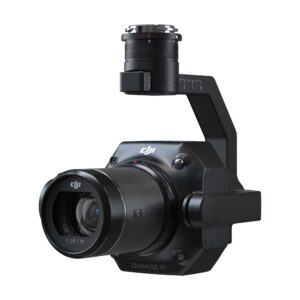
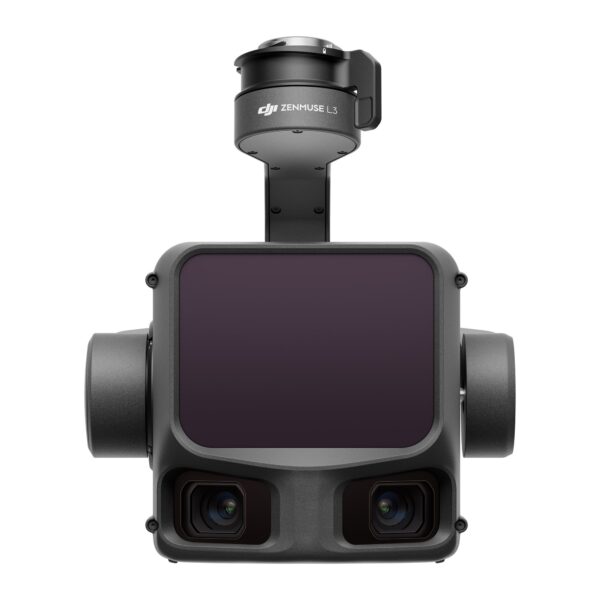
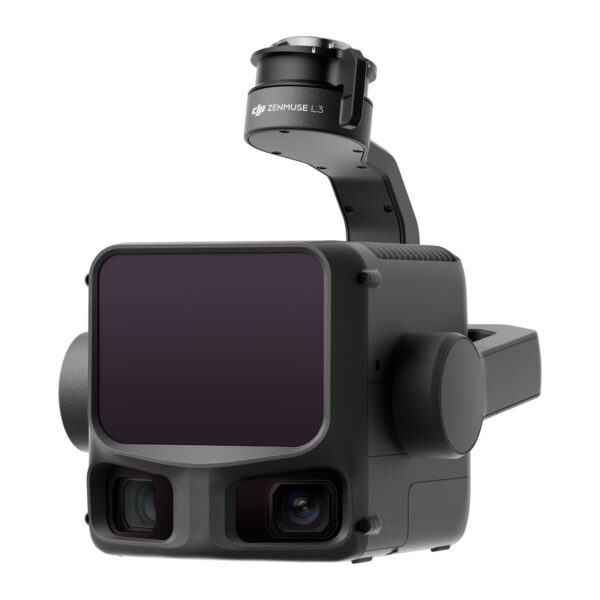
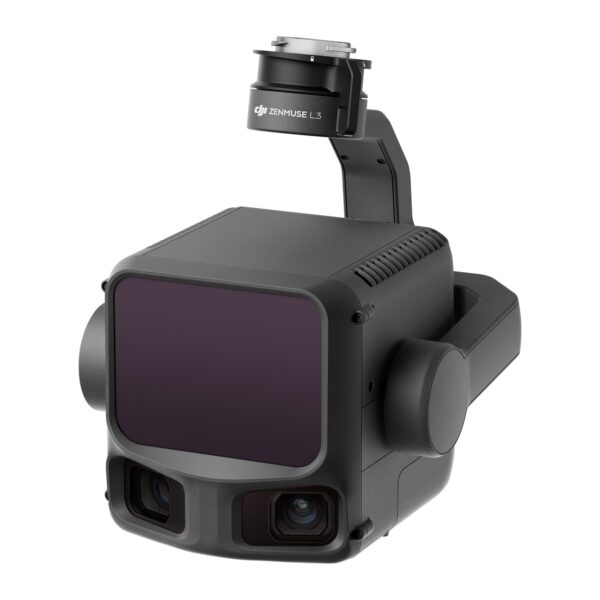
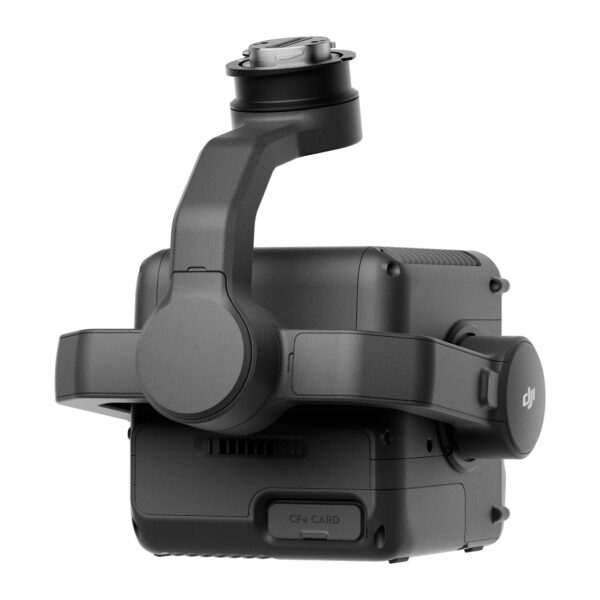
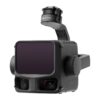
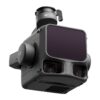
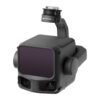
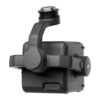
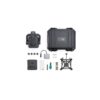
Zenmuse L3 integrates a 1535 nm long-range LiDAR, dual 100MP RGB mapping cameras, a high-precision POS system and a 3-axis gimbal into one compact 1.6 kg payload — delivering unprecedented performance for its size and pushing aerial LiDAR mapping to a new class of range, accuracy and efficiency.
1535 nm Long-Range LiDAR
A maximum detection range of 950 m at 10% reflectivity opens up flight altitudes of 300–500 m, dramatically expanding single-flight coverage. A 0.25 mrad beam divergence keeps the laser spot small — about one-fifth the size of the Zenmuse L2 at the same range — so the L3 picks up power lines, branches and other thin targets, and drives more energy beneath dense vegetation. Up to 2 million pulses per second and 16 returns deliver fine-grained 3D reconstruction with strong penetration.
Dual 100MP RGB Mapping Cameras — 107° FOV
Two 100MP 4/3 CMOS RGB sensors with mechanical shutters extend the horizontal field of view to 107° — far wider than a single-camera setup. Even at a 20% LiDAR side-overlap ratio, a single flight captures everything you need to produce both digital orthophoto maps (DOM) and digital elevation models (DEM), cutting flight count and turnaround time. Pixel binning provides an effective 25MP mode with larger pixels for low-light operations.
High Accuracy — LiDAR & Photogrammetry
An upgraded POS system delivers 0.02° heading and 0.01° pitch/roll accuracy (post-processed, 1σ), while the LiDAR achieves 5 mm ranging repeatability at 150 m. Vertical accuracy is better than 3 cm at 120 m altitude, 5 cm at 300 m and 10 cm at 500 m — supporting 1:500, 1:1000 and 1:2000 mapping projects. Point cloud thickness is half that of the Zenmuse L2, and the dual 100MP cameras hit a 3 cm GSD even at 300 m altitude — without ground control points.
Up to 100 km² per Day
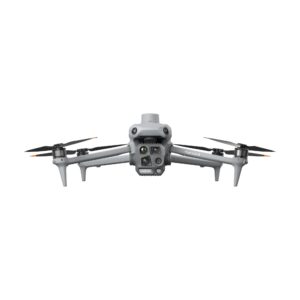
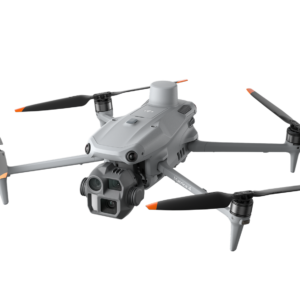
Paired with the DJI Matrice 400, the Zenmuse L3 covers up to 10 km² in a single flight at 300 m altitude. Over a full operational day, that is up to 100 km² of high-accuracy mapping — moving large-area surveys, corridor inspections and disaster response from multi-day campaigns into a single shift.
Multiple Deliverables in a Single Flight
One flight, multiple outputs. The Zenmuse L3 captures LiDAR and RGB data simultaneously, generating DEM, DOM, point clouds and 3D models from the same acquisition — no return flights for missed coverage, no separate sensor passes for photogrammetry vs. terrain.
Real-Time Point Cloud & Cloud Measurement
Real-time point cloud SLAM reconstruction delivers instant 2D and 3D previews during operations — measure on the fly, monitor progress, and stream data to DJI FlightHub 2 for emergency response and decision-making. Annotate points of interest and run line/area measurements directly in the cloud, with no waiting for post-processing.
PPK Workflow with DJI Terra
DJI Terra includes a robust PPK (Post-Processed Kinematic) engine for both RGB imagery and LiDAR — compatible with D-RTK 3, D-RTK 2 and standard base-station data (RINEX, RTCM, OEM). Achieve centimetre-level positioning even in areas with poor connectivity or no RTK coverage. Point-cloud processing for the L3 is a free feature in DJI Terra.
DJI Modify — Smart Filter & Profile Tools
DJI Modify automatically classifies point clouds into ground, vegetation, buildings, wires, electric towers and more, then lets you refine with Quick and Structure Selection tools. The Profile Tool extracts cross-sections for terrain analysis, structural review and elevation profiles — and Modify outputs the full range of mapping products (semantic point clouds, DEM, TIN, point grids, contour lines) for CAD and engineering workflows.
Scanning Modes
- Linear — consistent point cloud distribution, ideal for high-accuracy terrain mapping.
- Star-Shaped — multiple scan angles plus penetration, suited to forests and dense urban environments.
- Non-Repetitive — broad coverage with multiple angles, optimised for power-line inspection and complex structural surveys.
Application Scenarios
- Topographic Survey
- Earthwork
- Geological Disaster Investigation
- Engineering Survey
- Forestry Management
- Electricity & Power Line Inspection
- Mining Survey
- Emergency Survey & Disaster Response
Compatible Software
DJI Pilot 2 (flight & acquisition), DJI Terra (processing & PPK), DJI Modify (classification, profiling, deliverables) and DJI FlightHub 2 (cloud, real-time point cloud, fleet operations). Point cloud processing for the L3 in DJI Terra is free, including accuracy optimisation.
Key Specifications
| LiDAR wavelength | 1535 nm |
| Detection range | 950 m @ 10% reflectivity (100 kHz); 2000 m @ 80% reflectivity |
| Laser pulse rate | 100 / 350 / 1000 / 2000 kHz (max 2 million pulses/s) |
| Number of returns | Up to 16 returns (at 100 / 350 kHz) |
| Ranging repeatability | < 5 mm (1σ) at 150 m |
| Scanning modes | Linear, Star-Shaped, Non-Repetitive (80° × 80° max FOV) |
| RGB cameras | Dual 4/3 CMOS, 100MP each (effective 25MP via pixel binning) |
| Combined RGB FOV | 107° horizontal |
| RGB GSD | 3 cm @ 300 m altitude |
| Point cloud accuracy (300 m) | Vertical 5 cm RMSE, Horizontal 7.5 cm RMSE |
| POS accuracy (1σ, post-processed) | Heading 0.02°, Pitch/Roll 0.01° |
| Gimbal | 3-axis (pitch, roll, yaw), ±0.01° angular accuracy |
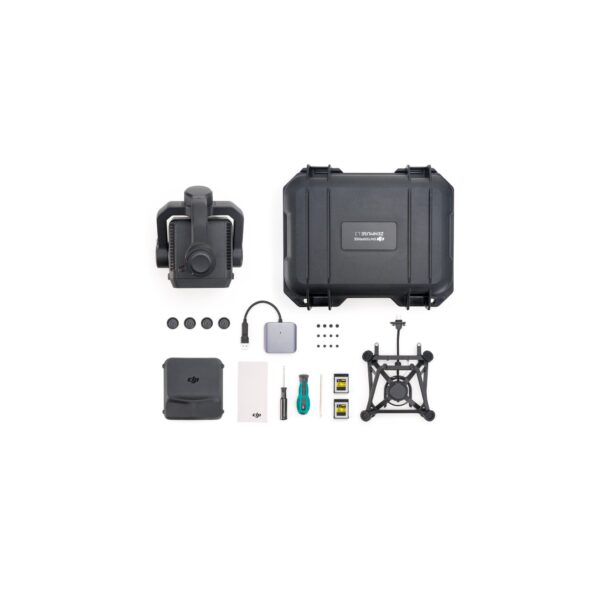
| Storage | CFexpress™ Type B (1 TB, included), 1500 MB/s sequential write |
| Compatible aircraft | DJI Matrice 400 (via Zenmuse L3 single gimbal connector) |
| Ingress protection | IP54 |
| Operating temperature | -20°C to 50°C |
| Weight & dimensions | 1.60 kg · 192 × 162 × 202 mm (L × W × H) |
| Power | 64 W typical / 100 W max |
| Laser safety | Class 1 (IEC 60825-1:2014) |
For the complete user manual and technical documentation, visit the official DJI Zenmuse L3 downloads page.
Service & Warranty
Supplied with the standard manufacturer warranty. First year free: DJI Care Enterprise Plus or Official Extended Warranty Service is included — covering unlimited free repairs, free two-way shipping and shared fleet protection (Care Plus), or an additional one-year warranty with original parts and DJI engineer support (Extended Warranty). Backed by GulfNet Emirates after-sales support in the UAE. Browse more drones and payloads at GulfNet Emirates Shop.
FAQ
Which drone is the Zenmuse L3 compatible with?
How is the Zenmuse L3 different from the Zenmuse L2?
What is the daily mapping efficiency?
Which software do I need to process L3 data?
Does it work over power lines?
What memory card does it use?
Is a warranty included?